NATO DIANA’s Human Resilience & Biotechnology challenge seeks cutting-edge solutions and advances that can help protect and enhance human health – whether in the clinic, or in the most demanding environments, from battlefields to disaster zones.
Advances in health and biotechnology are reshaping personalised medicine, offering new ways to better treat diseases and injuries. However, in the face of conflicts or natural disasters, delivering fast and dependable medical care when it matters the most can still be challenging.
For this reason, equipping medical units with advanced biotechnologies is crucial – whether it’s rapid trauma care tools, CBRNE (Chemical, Biological, Radiological, Nuclear and Explosive) response solutions, or innovative approaches to physiological monitoring. Through the Human Resilience & Biotechnology challenge, innovators within DIANA’s programme are developing and refining dual-use solutions in these areas, with the goal of helping safeguard the wellbeing and security of both civilians and military personnel.
Rune Linding is Challenge Manager for DIANA’s Human Resilience & Biotechnology challenge. Reflecting on the significance of the challenge, he said:
“By supporting innovators in this challenge area, DIANA is helping to advance next-generation capabilities that can be decisive in life-or-death situations. Biotechnology is increasingly important to sustaining NATO combat power in prolonged operations, including through resilient access to antibiotics and other essential chemicals via biomanufacturing, expanded blood supply and surgical capacity in contested environments, and the development of biological countermeasures.”
Across DIANA’s 2026 cohort of innovators, 15 innovators in the Human Resilience & Biotechnology challenge are developing remarkable solutions:
Cohesys – Simplifying bone surgery
Cohesys is a Canadian company revolutionising fracture repair with BoneTape, an innovative type of medical tape that provides a more straightforward approach to fracture repair.
Bone fractures, especially injuries to the face and skull, are still very common in military personnel. Currently, the most common way to repair these fractures is by using metal plates and screws – requiring special equipment, trained staff, and relying on a complex process. BoneTape offers a simpler solution: it comes as a single piece of tape that can be cut to size, applied without drilling onto bone, and is fully resorbed into the body in one year.
By making procedures less invasive and easier for medical teams to perform, BoneTape not only streamlines the treatment process but also helps patients recover better and faster - making it a real breakthrough for surgical care in challenging environments.
“Scaling surgical capacity by simplifying procedures and protocols is a high priority for NATO medical support. In the face of shortages of medical personnel solutions that make surgery less complex and more scalable are essential. Cohesys is on a very promising path to deliver on all these challenges. The company is currently targeting facial blast victims a growing group due to drone war fare,” described Linding.
“The NATO DIANA programme has significantly improved our network and understanding of how to reach military end-users of NATO armed forces in Europe. We are encouraged by the positive reception to our technology we have received from European surgeons throughout the programme. This builds upon our existing US military relationships as we look to deploy BoneTape across NATO,” added Michael Tessier, COO and Co-Founder at Cohesys.
-qdj8u1.png) Cohesys' BoneTape is depicted here. It is provided as a single piece, unlike plates and screws with many shapes and sizes.
Cohesys' BoneTape is depicted here. It is provided as a single piece, unlike plates and screws with many shapes and sizes.Avivo – Scaling blood supply
Avivo, another Canadian company, can quickly turn any blood type - A, B or AB - into universal blood, which can be safely given to anyone who needs it. This solution is a game-changer in the world of blood transfusion and organ transplantation.
Haemorrhage is the leading cause of potentially survivable battlefield deaths, and, in emergencies, giving blood is the best way to help someone recover from serious injuries.
However, reliance on universal donor blood – belonging to blood type O - is costly, logistically difficult, and hard to sustain in remote environments. Walking blood banks help address shortages, but it is not enough.
Avivo’s technology uses specially engineered proteins and a rapid filtration system to convert blood types A, B, or AB into universal O blood. The process is quick and takes place right at the point of care, so medics can provide transfusions to anyone - regardless of their blood type - when and where it’s needed most. In this way, by making more blood available in emergencies, their solution could save lives and ease the challenges of supplying blood in mass-casualty care scenarios and other challenging environments.
“Operational lessons from Ukraine underscore that resilient, scalable blood supply is critical. Biotechnologies that expand available blood capacity can therefore make a significant contribution to NATO medical support. Avivo is on a good track to deliver on that promise,” added Linding.
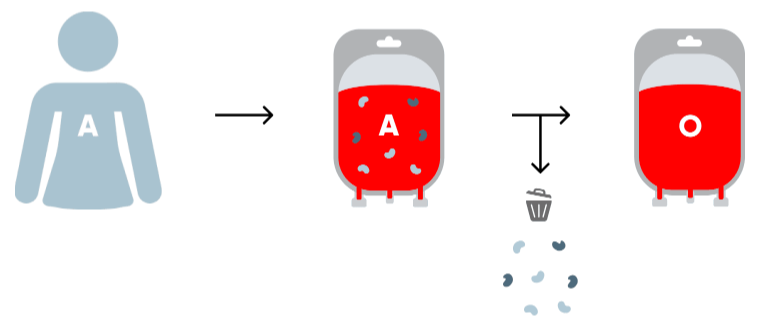
Diagram from Avivo, depicting how enzymes can be added to blood bag systems at the point of whole blood or red blood cell collection.
Lysando - Antimicrobial-resistant wound care
Lysando Innovations Lab, based in Germany, is developing a new type of treatment to help fight bacterial infections that no longer respond well to antibiotics. Lysando’s ‘Artilysin’ platform targets harmful bacteria without disturbing the body’s beneficial microbes. That selective approach could make treatment both more effective overall, and less disruptive to the body, while addressing one of the most pressing problems in modern medicine: antimicrobial resistance.
Lysando’s product, Medolysin, is a wound spray based on their ‘Artilysin’ technology. It is designed for situations where infections need to be treated quickly and reliably, including the battlefield. Medolysin works in two ways: it helps break down bacteria directly while also disrupting their outer membrane, making it harder for them to survive. The product is portable, shelf-stable and simple to use – making it ideal for both the clinic and more remote environments.
“Through DIANA, we have been able to connect our technology with the people who understand the operational need best: defence medical experts, end-users and NATO stakeholders. For Lysando, the mission is clear: bring microbiome-preserving antimicrobial innovation to wound care, so that injured soldiers and civilians can benefit from the best technology when it matters most,” said Markus Matuschka de Greiffenclau, CEO at Lysando.
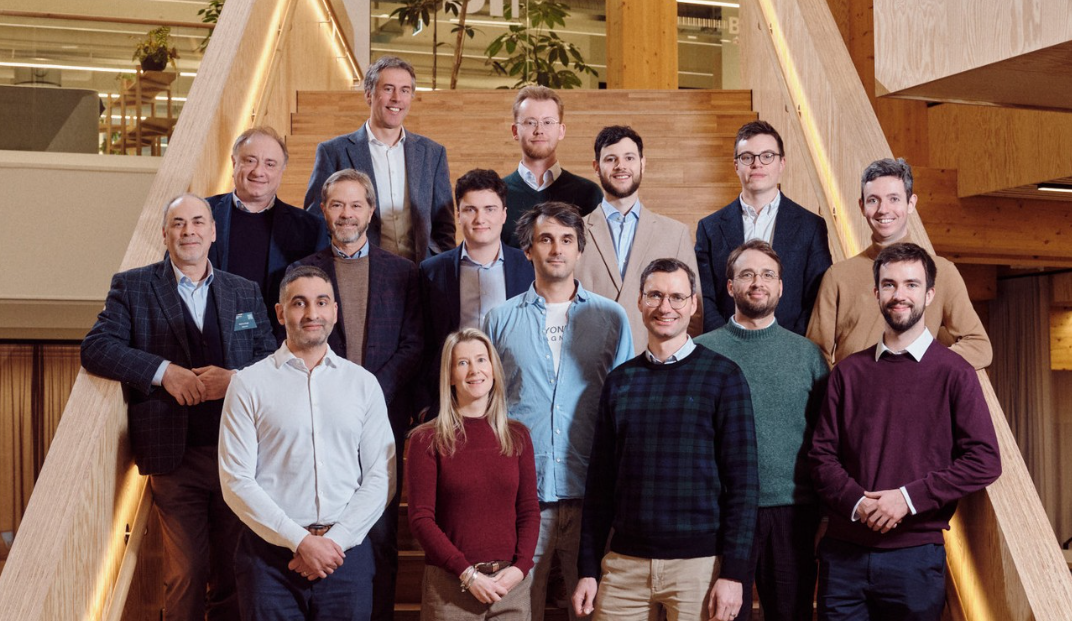
Innovators from DIANA's 2026 cohort at the BioInnovation Institute accelerator site, including Lysando and Cohesys representatives.
What is next for DIANA’s Human Resilience & Biotechnology innovators?
As we look ahead, the innovators part of the Human Resilience & Biotechnology challenge will soon complete DIANA’s accelerator programme – but their journey is far from over. Over the next few months, innovators will have the opportunity to be involved in NATO operational exercises, where they will continue to make significant advances in fields such as trauma triage, physiological monitoring, and CBRNE response.
To find out more about the 2026 DIANA innovators in the Human Resilience & Biotechnology challenge, please visit: https://www.diana.nato.int/about-diana/2025-cohort-of-companies.html
And remember, our brand-new challenges for 2027 have launched. Follow us on LinkedIn to find out more and apply soon if you want to be part of the next wave of innovation!