DIANA’s Contested Electromagnetic Environments 2026 challenge is about keeping communication, navigation, and surveillance systems working – even when there’s interference or deliberate disruption.
In a contested electromagnetic environment, the electromagnetic waves – invisible signals used by phones, microwaves, or GPS – become disrupted. When the environment becomes contested, important systems and critical infrastructure that we use on a daily basis can fail or slow down.
To tackle this challenge, DIANA sought innovative solutions that help military and civilian technologies keep working reliably – from key advances in encryption techniques that guard against tampering and jamming, to special materials that block out unwanted signals, or new forms of navigation that don’t rely on vulnerable systems like GPS.
Across DIANA’s 2026 cohort of innovators, 15 innovators in the Contested Electromagnetic Environments challenge are developing cutting-edge solutions:
Evolunar - Navigation system that doesn’t rely on GPS
Evolunar, based in Italy, is developing and refining a navigation system that enables drones and robotic vehicles to operate reliably even when GPS signals are jammed or unavailable - leveraging technology originally designed for lunar exploration.
By combining data from cameras, distance-measuring tools, and motion sensors, Evolunar’s solution can create detailed 3D maps and guide drones without relying on signals like GPS.
Their technology also allows drones to fly autonomously in areas where external signals such as GPS are often blocked or distorted, such as tunnels and industrial sites – offering true resilience against electromagnetic interference and spoofing.
By helping deploy drones in environments where traditional navigation fails, Evolunar is supporting a wide range of civilian and defence applications.
"Through the NATO DIANA programme, Evolunar has accelerated its technological development and had the opportunity to test its GNSS-denied navigation solution in representative scenarios, while engaging with defence stakeholders and armed forces across the Alliance’s innovation ecosystem. This experience is allowing us to further advance resilient navigation capabilities in contested environments,” said Giuseppe Bortolato, CEO at Evolunar, when reflecting on his company’s experience as part of DIANA’s Accelerator Programme.
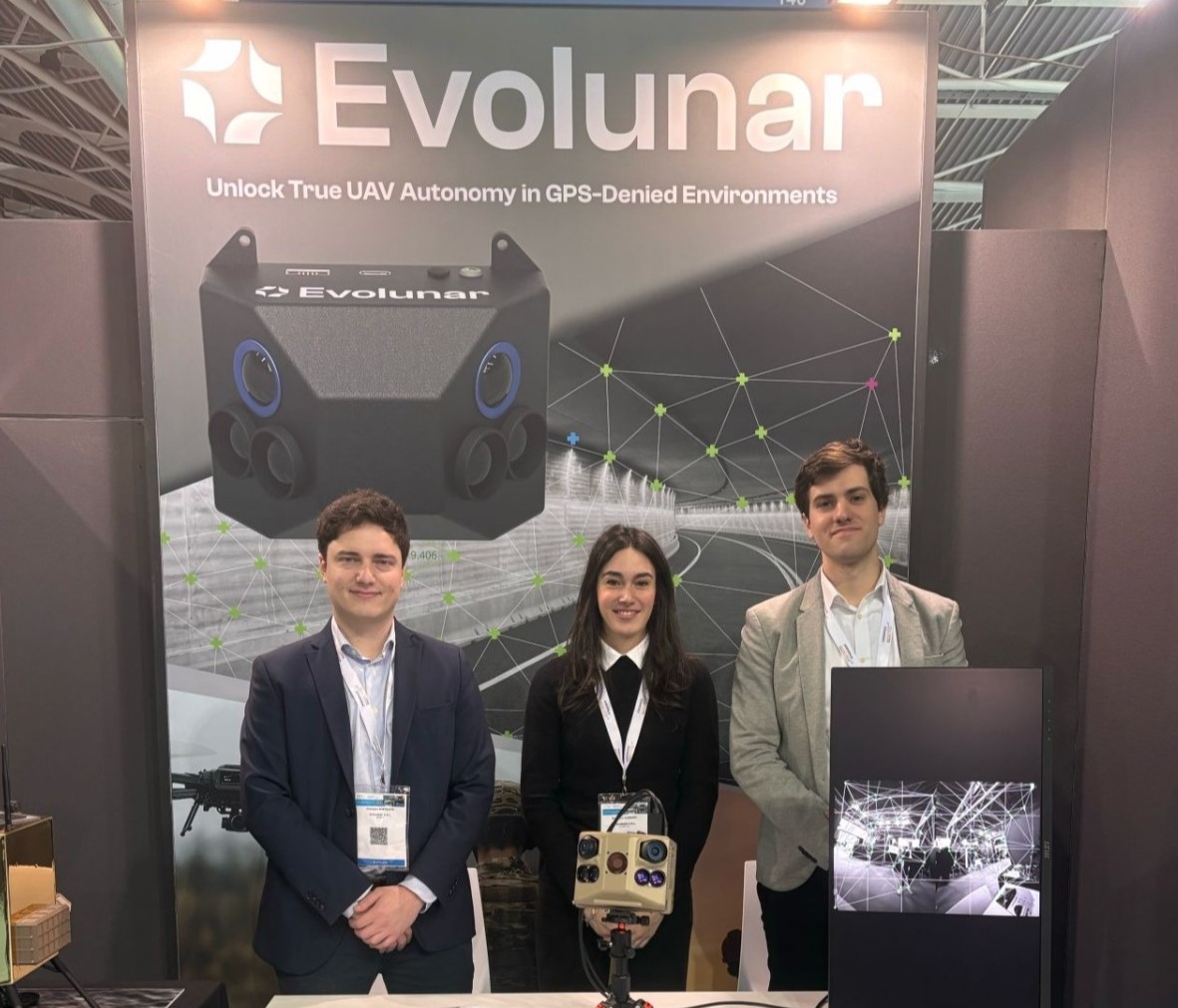
Evolunar team attending the Aerospace & Defense Meetings Torino.
Odysseus Space - Data from space-to-ground fast and safely
Odysseus Space is a company from Luxembourg that provides laser communication solutions for space data transfer.
Their cutting-edge laser communication technology, Cyclops, allows satellites and ground stations to exchange large volumes of data quickly and securely. Their solution uses beams of light instead of traditional radio waves, making it much harder for signals to be disrupted.
Thanks to the exceptionally narrow laser beam used by their solution, the system offers greater resistance to interference and makes jamming or spoofing more difficult than with conventional radio-based links. This advance represents huge step forward from older radio-based systems and is vital for maintaining secure connectivity in the most contested environments.
FOSSA Systems – Real-time awareness of the electromagnetic environment
FOSSA Systems is a Spanish company that develops and operates small satellites in low Earth orbit (LEO). FOSSA’s solution, SPECTRA is focused on passive signals intelligence and electromagnetic situational awareness, using a constellation of satellites, software, and analytics to detect, classify, and geolocate jamming, spoofing, and other unauthorised radio-frequency emissions.
By mapping interference and identifying anomalous RF activity, FOSSA’s solution can support situational awareness in contested environments, helping defence and security users protect critical assets and operations.
"Through NATO DIANA, FOSSA has significantly strengthened its proximity to end users, gaining first-hand insight into real operational needs and creating a direct feedback loop to shape both current and future solutions. This experience has been key to ensuring that we go beyond building smart technology, and instead deliver solutions that solve critical, real-world probles,” said Antonio León García, Head of Sales at FOSSA.

The FOSSA Systems team pictured alongside other DIANA innovators at DIANA's UK JANUS Allies accelerator site.
Looking ahead
As electromagnetic threats grow and technology advances, the need for resilient solutions for contested electromagnetic environments becomes more urgent. DIANA’s 2026 cohort is making a difference in this space – testing and refining their technologies through DIANA’s test centres and building new partnerships as they strive to make an impact.
To find out more about the 2026 DIANA innovators in the Contested Electromagnetic Environments challenge, please visit: https://www.diana.nato.int/about-diana/2025-cohort-of-companies.html
And remember DIANA’s new challenges for 2027 have been announced and applications are open. Follow us on LinkedIn if you want to hear about our latest news!