From air to sea, land to space, autonomous and unmanned systems are transforming how military operations are planned and executed. NATO DIANA’s Autonomy & Unmanned Systems 2026 challenge area is focused on accelerating these technologies — unlocking new levels of operational reach, persistence, and resilience, while reducing risk to personnel.
Through its 2026 cohort, DIANA is supporting innovators developing solutions that can operate in complex, degraded, and contested environments, helping ensure the Alliance maintains a decisive edge.
Unmanned systems, including drones and autonomous vehicles, are increasingly central to both defence and civilian operations. They enable faster decision-making, improved situational awareness, and new ways of operating across domains. However, these systems must function in environments where communications are disrupted, GPS signals are unreliable, and adversaries actively contest access.
-yvhxn2.png)
LCol Jan Strbik of the Czech Armed Forces is DIANA's Challenge Manager for Autonomous and Unmanned Systems.
This creates a critical need for technologies that can adapt, navigate, and operate independently. At the same time, the rise of unmanned systems introduces new challenges, particularly the need to detect, counter, and defend against them.
NATO DIANA’s role as accelerator and enabler
DIANA plays a key role in this ecosystem by connecting innovators with end users, testing environments, and investment pathways — accelerating the transition of dual-use technologies from concept to operational capability.
With over 25 years in the Czech Armed Forces, Lieutenant-Colonel Jan Strbik, DIANA Challenge Manager for Autonomy & Unmanned Systems, brings an operational perspective to this rapidly evolving field.
“Autonomy and unmanned systems are reshaping how militaries operate across all domains," said LCol Strbik. "They increase reach, persistence, and resilience while reducing risk to personnel. DIANA’s role is to identify and accelerate solutions that can move beyond demonstration and deliver real operational advantage in complex, contested environments.”
NATO DIANA Innovators in Autonomy & Unmanned Systems
Across the 2026 cohort, innovators are tackling key barriers to scaling autonomy — from resilient navigation to counter-drone defence and advanced sensing.
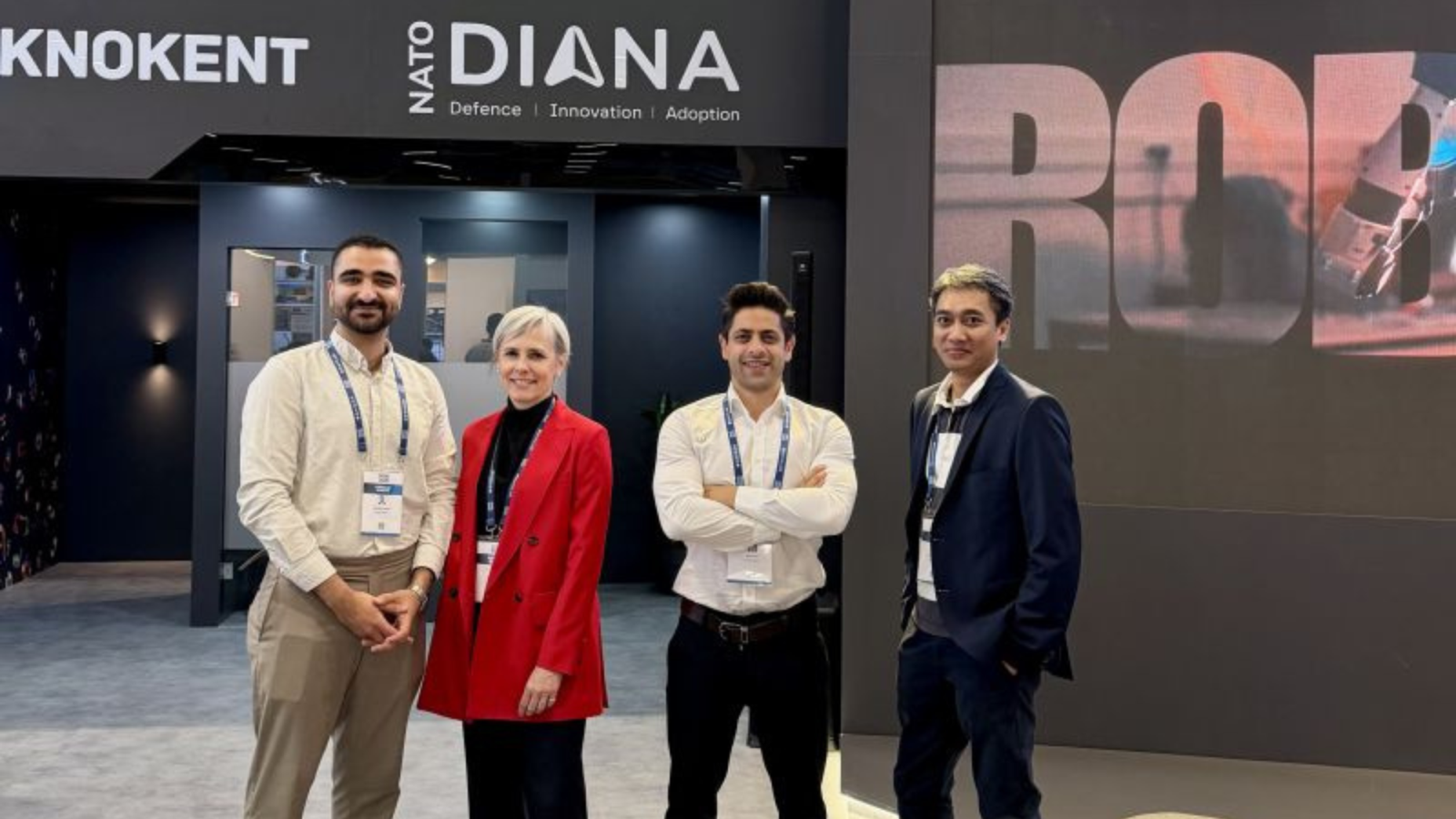
The NeuralAgent team at the NATO DIANA Accelerator Site ODTÜ TEKNOKENT in Ankara, Türkiye.
NeuralAgent (Germany) is advancing AI-driven autonomy by enabling systems to adapt and make decisions in real time, even when connectivity is limited—addressing a core challenge in deploying reliable autonomous systems in contested environments.
“NATO DIANA has been instrumental in accelerating NeuralAgent’s decentralised AI-Agent swarm technology toward operational deployment,” said Dr. Ing. Onur Deniz, founder and CEO of NeuralAgent. “The programme enabled us to further mature and validate autonomous collaboration, distributed decision-making, and resilient mesh networking capabilities in representative defense environments while engaging directly with NATO allies and end users. Beyond the technical progress, DIANA provided a unique platform to demonstrate how sovereign, trustworthy AI swarms can enhance the effectiveness and resilience of future autonomous systems.”
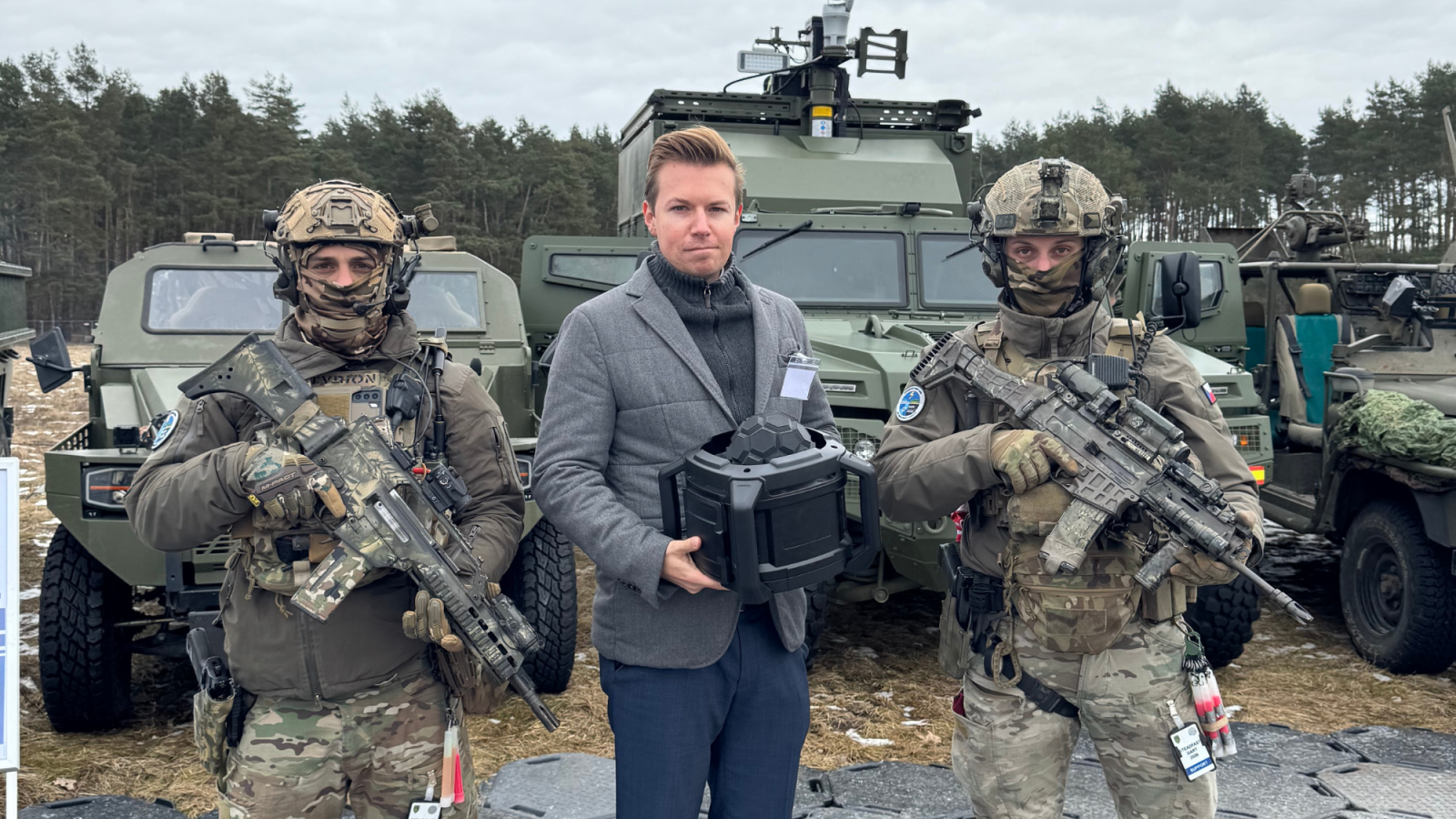
Harry Howe and Arcani's technology at the NATO exercise STEADFAST DART 2026 in Germany.
Arcani
(United Kingdom) is redefining detection through acoustic sensing technology that can identify and track drone threats even when they are not visible to traditional sensors—strengthening situational awareness in complex environments.
“NATO DIANA taken the very literal meaning of accelerator, and pushed us into light speed,” says Arcani CEO Harry Howe. “We are now connected with end users and Primes from all over NATO, and actively engaged in exercises, demonstrations and even contract negotiations with some of the world’s largest defence organisations.”
Mara (United States) is focused on countering coordinated drone threats, providing 360-degree protection against swarms in GPS-denied and electronically contested environments. Its portable, cost-effective system is designed for rapid deployment and reduced operator burden.
“DIANA unlocked NATO access for Mara. Outstanding work from DIANA team and the Krakow cohort,” said Daniel Kofman, CEO MARA.
As autonomous technologies continue to evolve, their importance to security and defence will only grow. Through DIANA, innovators gain access to world-class test centres, operational insights, and investment networks that help turn promising ideas into deployable capability.
“These innovators demonstrate how autonomy is moving from concept to capability,” adds LCol Strbik. “What stands out is their focus on real-world deployment, solutions designed to operate in contested environments and deliver tangible advantage to operators.”
Looking ahead, the 2026 cohort will progress through validation, testing, and scaling, working closely with NATO stakeholders to ensure their solutions meet real operational needs.
Explore the full range of innovators and learn more about the 2026 cohort here. And remember, our brand-new challenges for 2027 have been announced, so if you want to be part of DIANA's 2027 cohort, apply now: https://www.diana.nato.int/challenges.html